
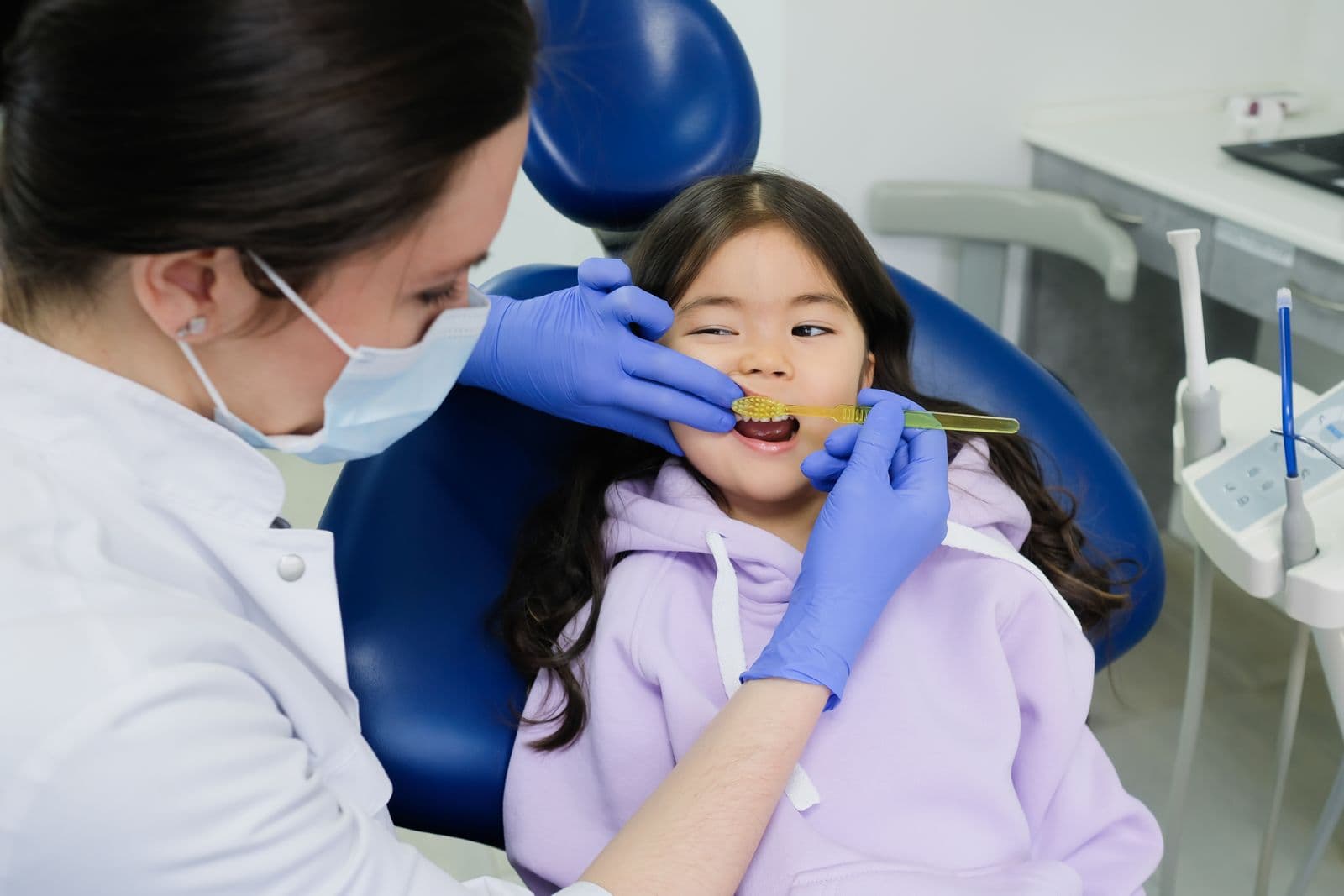
Kids' dental care works best when it starts early, before a problem forces the issue. Many Australian children may be eligible for a range of dental services under Medicare's Child Dental Benefits Schedule, depending on the family's Medicare and payment status. Yet many families wait years longer than dentists recommend before booking that first appointment.
This guide covers when a child should first see a dentist, what happens at the appointment, how to prepare a child at home, and how the Child Dental Benefits Schedule (CDBS) can help cover the cost.
Key takeaways
- A child should see a dentist by their first birthday, or when their first tooth appears, whichever happens sooner
- The first visit is a gentle look-and-count check, not treatment
- Many children are reviewed every 6 to 12 months after that, depending on their decay risk
- Eligible children can access up to $1,158 in CDBS benefits over two consecutive calendar years, for a two-year period beginning in 2026
When Should a Child Start Seeing a Dentist?
The One-Year (or First Tooth) Rule
A child should see a dentist by their first birthday, or when their first tooth appears, whichever happens sooner. This is the Australian Dental Association's (ADA) guidance, and it applies even when a baby's teeth look perfectly healthy.
"Dentists recommend taking a child for their first dental visit when their first tooth comes through or by the age of one – whichever comes first," ADA President Dr Chris Sanzaro has said. "It helps introduce the infant to the sights, sounds and sensations of the dentist, as well as helping to spot any issues early." Early visits are not about intensive treatment. Instead, they let a dentist assess oral development and bite as appropriate for the child's age, and give a child a gentle introduction to the clinic environment.
Why Most Australian Families Wait Too Long
According to an ADA survey of 25,000 Australian adults, 40% of respondents thought around two years old was an acceptable age for a first dental visit, 20% believed age three was fine, and 10% believed age four or older was appropriate. Only a quarter of respondents correctly identified age one or younger as the right time. "It all points to the need to fill in the gaps in parents' knowledge of the right time to take action," Dr Sanzaro said.
That gap matters. In the 2012–14 National Child Oral Health Study, the most recent national clinical data available, about 34% of Australian children aged 5 to 6 had experienced decay (also called dental caries) in their baby teeth, and about 27% of children aged 5 to 10 had untreated decay in their primary teeth, according to the Australian Institute of Health and Welfare (AIHW). These figures are older national data rather than a current 2026 estimate. Still, they show untreated dental disease in early childhood is common and can affect eating, speech, and confidence. An earlier first visit gives a dentist the chance to catch small issues before they become bigger, more expensive ones.
What Happens at a Child's First Dental Appointment
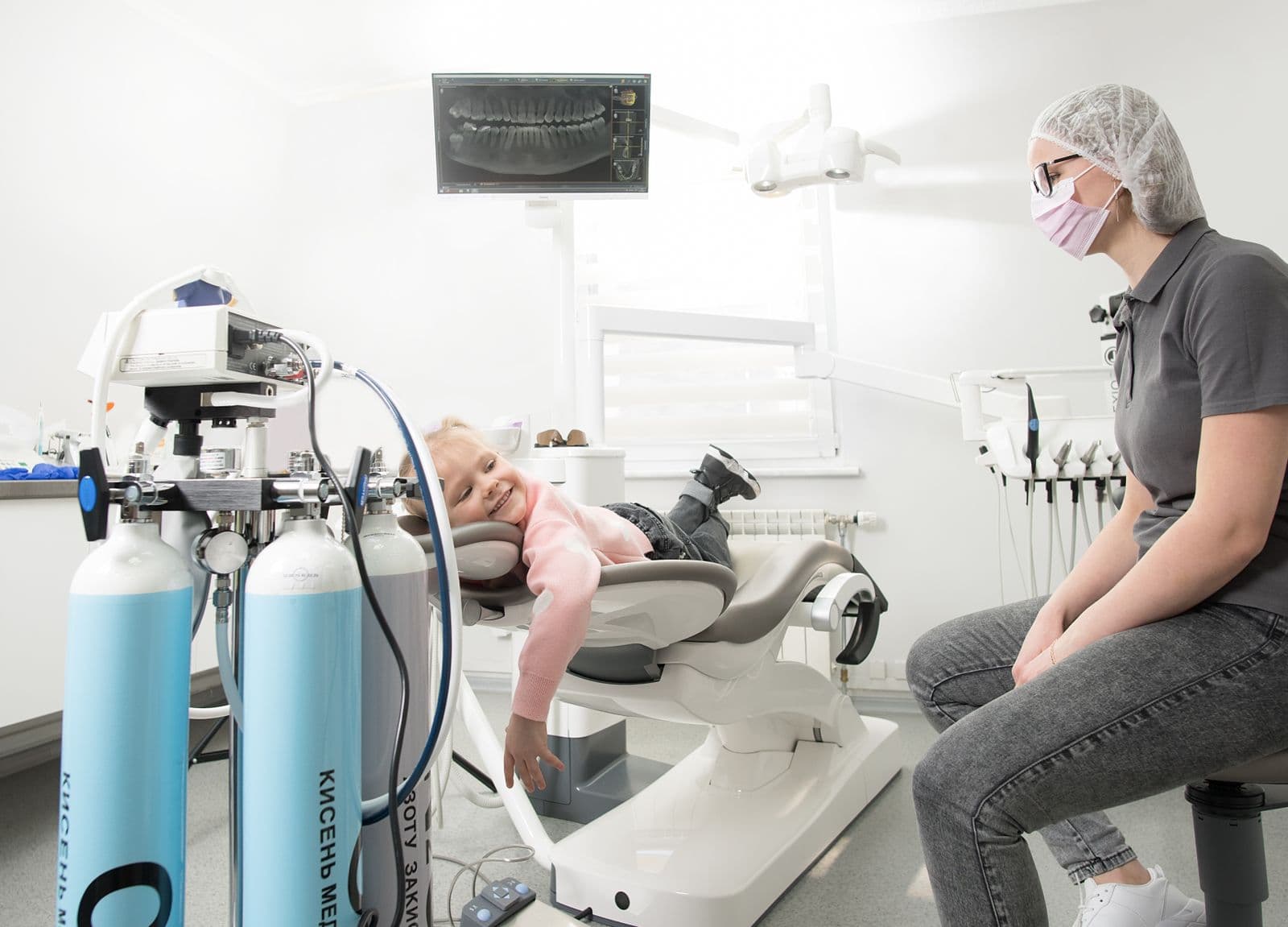
A first dental appointment is typically gentle and mostly about looking and counting rather than treatment, though the exact length can vary by clinic and by child. The dentist checks the number and position of teeth, examines the gums, and talks through brushing habits with the parent or carer.
A Gentle Look-and-Count Check
For an infant or toddler, the check-up usually happens with the child sitting on a parent's lap, facing the dentist. The dentist counts teeth, checks for early signs of decay or staining, and assesses bite development as far as possible for a very young child. Very little, if anything, is done at this first visit beyond the examination itself. The goal is familiarity, not treatment.
Building Trust for Future Visits
Each visit after the first builds on the one before it, so the child associates the dental clinic with a calm, predictable routine rather than a one-off event. Dentists use this time to flag anything worth watching, such as an emerging molar or a habit like thumb-sucking that could affect alignment. Many children are reviewed every six to 12 months from this point on, though the right interval depends on the child's risk of decay, oral health history, and the dentist's assessment. Children at higher risk may need more frequent visits.
How to Prepare a Child for the First Dental Visit
Preparation matters more for the parent than the child in most cases, since a calm adult tends to produce a calm child. Simple, honest language and a relaxed appointment time both help.
Talking About the Visit in Simple, Positive Words
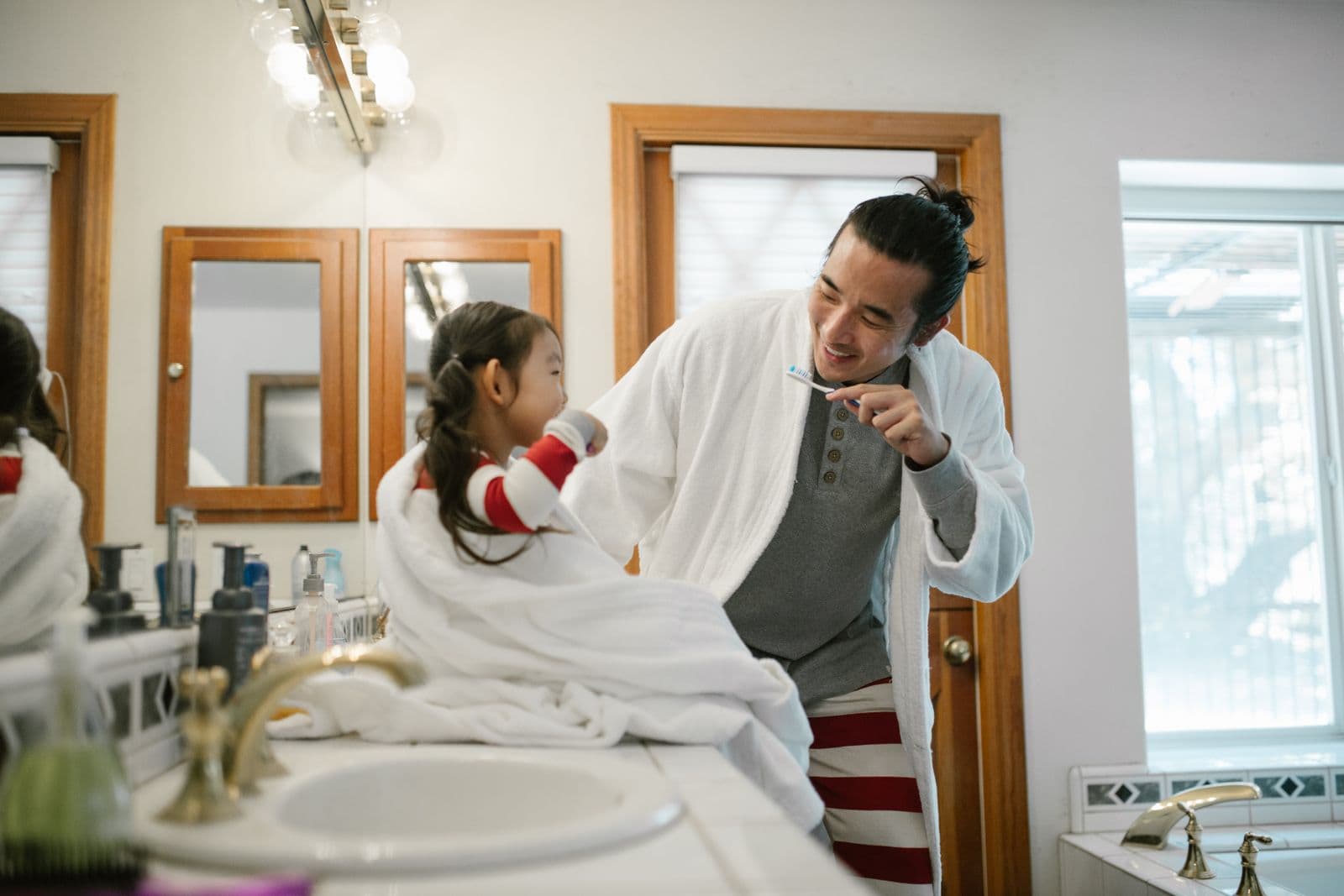
Describing the appointment as a chance for the dentist to count teeth or check on a smile keeps things low-key and age-appropriate. Neutral, honest language works best, and frightening details are best left out until they are actually relevant; if a procedure involving discomfort is planned, it is better for the dental team to explain it in age-appropriate terms than for a parent to promise it will never hurt.
Reading a picture book about visiting the dentist, or role-playing a check-up with a favourite toy beforehand, can also make the real appointment feel familiar and help turn it into a positive experience.
What to Bring and How to Time the Appointment
If possible, choosing a time when the child is usually rested and not hungry or rushed, such as before nap time, is a sensible practical tip rather than a firm rule. Bringing a comfort item, such as a favourite toy or blanket, can help too. It is worth bringing along a list of any questions about teething, thumb-sucking, or brushing resistance, since the first visit is a practical opportunity to raise them directly with the dental team.
Accepting New Patients
Book your child's first dental visit
Eligible families may be able to use the Child Dental Benefits Schedule towards the cost. Ask our team to check eligibility before you book.
Daily Habits That Protect a Child's Teeth Between Visits
Good habits at home do more for a child's oral health day to day than any single appointment. Brushing routine, toothpaste choice, and food and drink all play a part.
Brushing Basics by Age
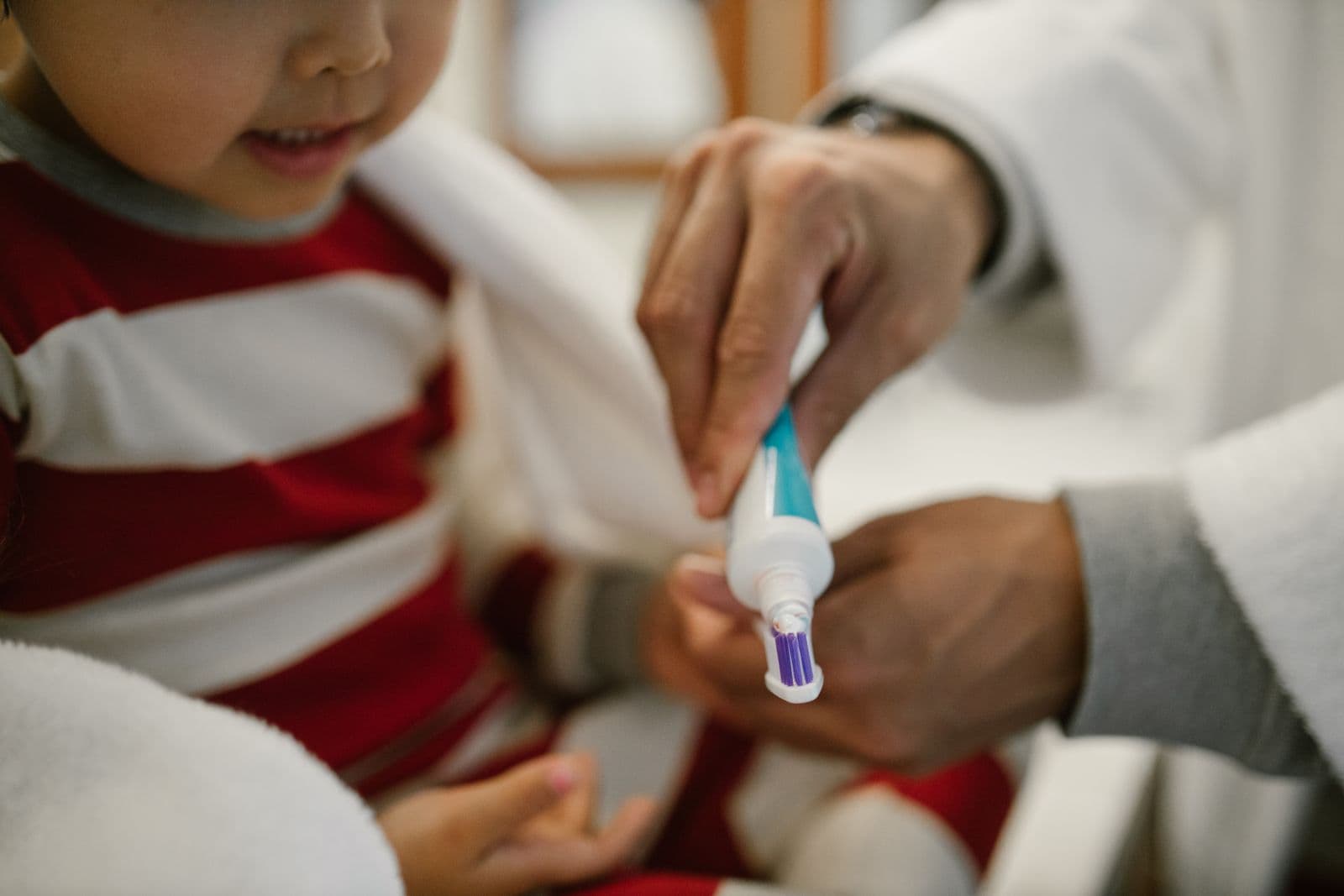
Cleaning starts as soon as the first tooth appears, using a soft, child-sized toothbrush. Supervision remains important at these ages, since young children tend to swallow rather than spit and should not be allowed to lick or eat toothpaste directly from the tube. Parents and carers should generally continue helping with or supervising brushing until around eight years old, since a child's technique and ability to brush thoroughly on their own usually takes that long to develop.
| Age | Toothpaste | Amount |
|---|---|---|
| Under 18 months | Water only, unless a dental professional recommends fluoride toothpaste earlier due to increased decay risk | N/A |
| 18 months to 6 years | Low-fluoride children's toothpaste (around 500–550 ppm) | Pea-sized amount, twice a day |
| From 6 years | Standard adult-strength fluoride toothpaste (generally around 1,000–1,500 ppm), unless a dentist recommends otherwise | Pea-sized amount, twice a day |
Based on ADA fluoride guidance. A dentist may recommend a different concentration depending on the child's decay risk, local water fluoridation, and ability to spit rather than swallow.
Food, Drinks and Plaque
Plaque builds up on teeth constantly, and it thrives on the sugars left behind by juice, cordial, and other sweetened drinks. Tap water is the better everyday choice for a child between meals, particularly in areas with a fluoridated water supply. Once two teeth sit side by side, usually somewhere in the toddler years, flossing daily helps clear the plaque a toothbrush cannot reach. Limiting sugary snacks to mealtimes, rather than grazing throughout the day, also reduces the number of acid attacks on developing teeth.
Paying for Kids' Dental Care: The Child Dental Benefits Schedule
The Child Dental Benefits Schedule (CDBS) is a Commonwealth Government program that helps cover the cost of basic dental services for eligible children. For a child whose two-year benefit period begins in 2026, eligible children can access up to $1,158 in benefits over two consecutive calendar years. If a child's two-year period already began in 2025, the earlier $1,132 cap continues to apply for that cycle — ask the clinic to confirm which cap and remaining balance applies.
Who Is Eligible for the CDBS
A child is generally eligible for the CDBS if they are aged 0 to 17 years for at least one day of the calendar year, are eligible for Medicare, and receive (or have a parent or carer who receives) certain Australian Government payments, such as Family Tax Benefit Part A. Eligibility is assessed at the start of each calendar year and applies for the full year once confirmed. Families do not need to submit a separate application in the usual sense, as dental clinics can generally check a child's eligibility and remaining balance directly through Medicare before treatment begins. It is still worth confirming eligibility and any out-of-pocket costs with the clinic before an appointment.
What the CDBS Covers (and What It Doesn't)
The benefit covers a range of dental services considered clinically necessary, including examinations, cleaning, and fillings, but it excludes cosmetic work, orthodontics, and any treatment carried out in hospital. See the Services Australia CDBS page for the full list of covered items.
Because the cap applies over two consecutive calendar years rather than resetting every calendar year, any unused balance from year one can generally be used in year two, provided the child remains eligible that year. Any amount still unused at the end of the two-year period is lost rather than carried forward again, so it is worth asking the dental clinic to confirm what has already been used and what balance remains before it expires.
When a Child Needs a Paediatric Dentist or Specialist Referral
Most children can be cared for by general dentists who specialise in family and children's care, but some situations call for a specialist paediatric dentist. Specialist paediatric dentistry involves additional postgraduate training specifically in treating infants, children, and adolescents, including those with complex medical needs or significant dental anxiety.
Common Reasons for a Referral
- Extensive decay requiring dental treatment under sedation or general anaesthetic
- A developmental condition affecting the teeth or jaw
- A level of dental anxiety that a general dentist's usual approach cannot manage
- Early orthodontic concerns, such as crowding or a bite that is clearly misaligned (which may instead be referred to an orthodontist or other specialist)
Many children who see a general dentist regularly from an early age are managed without needing this level of specialist care, since problems tend to be caught and addressed early.
Ongoing Care Through the Teenage Years
Routine dental care does not stop once a child starts school. Regular dental reviews through primary and secondary school allow the dental team to monitor how permanent teeth and molars are coming through, track bite development and oral hygiene, and flag whether orthodontic treatment might be worth discussing, with the timing of reviews tailored to each child's individual needs. CDBS eligibility, where applicable, continues right up until a young person turns 18 years of age, which makes this healthcare benefit accessible for many families already using the scheme for younger children.
Give Your Child a Confident Start With Dental Care
Starting dental visits from the first tooth or first birthday helps make check-ups feel like a normal part of growing up. Combined with good brushing habits and a balanced diet, early visits can help catch concerns before they're harder to manage.
At Campsie Dental Spa, children's dental care is tailored to their age, comfort and individual needs — routine check-ups, preventive care, and practical advice for parents and carers at home. Eligible families may also be able to use the Child Dental Benefits Schedule.
CDBS caps, eligibility rules and fluoride guidance can change — always confirm current details with your dentist before booking.
Common Questions
Frequently Asked Questions

Written by
Dr James (Jim) Sternhell
Principal Dentist, Campsie Dental Spa
Dr James Sternhell has been practising dentistry for over 20 years, with a particular focus on restorative and cosmetic treatments. He is passionate about helping patients understand their options so they can make confident, informed decisions about their dental care.